
At a glance
| Field | Detail |
|---|---|
| Brand | Hallow |
| App category | Health and wellness; Christian prayer and meditation app |
| Market | Not specified |
| Channels | Meta within a broader paid campaign; peer sharing, web-to-app banners, influencer links and offline QR codes |
| Goal | Increase app downloads and engagement during Lent and understand campaign performance |
| Reported result | Branch reports a 42% reduction in customer acquisition cost from January to February 2024 |
The Hallow app acquisition case published by Branch describes how Hallow combined paid campaign attribution with improvements to sharing and web-to-app journeys. Hallow is a Christian prayer and meditation app. Its campaign centered on Lent, an important acquisition period for the company. These are historical results: the page explicitly dates its customer acquisition cost comparison to January and February 2024, rather than describing a new campaign.

What they did
According to Branch, Hallow had struggled to create reliable, trackable links across organic channels. Shared links could send recipients to the app’s homepage instead of the intended content. Hallow adopted Branch sharing links so recipients could reach specific content, including after visiting the app store and installing the app.
Ahead of Lent, Hallow increased paid media spending across several platforms, including Meta. Branch says Hallow used Universal Ads to understand campaign performance and inform future budget allocations. The page does not provide a separate Meta result or isolate the effect of attribution from the campaign itself.
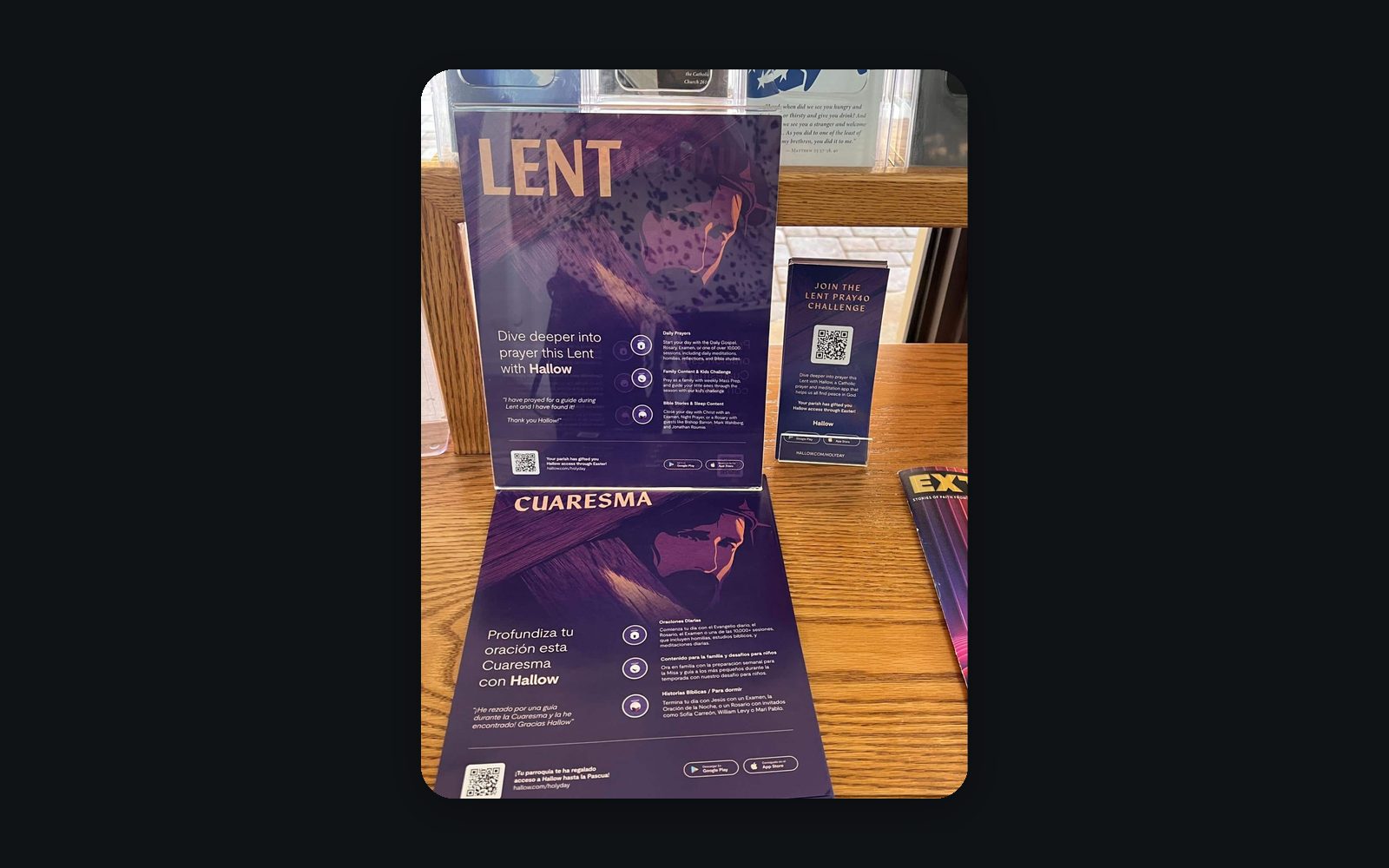
The organic work covered several distinct paths. Hallow tested web-to-app banners through Branch Journeys, changing elements such as copy, color, font and placement. Influencers received unique links that Hallow could manage and evaluate through Branch. The team also used QR codes on parish banners and flyers to connect offline promotion with the app.
Together, these activities gave Hallow more ways to direct people toward relevant app content and assess the performance of different promotional paths. That describes the approach reported by Branch; it does not establish how much each activity contributed to the overall outcome.
Results
Branch reports the following figures. Campaign market, attribution windows and the detailed customer acquisition cost definition are not specified. The February install and attribution statements do not explicitly restate their year.
| Metric | Reported figure | Basis and scope |
|---|---|---|
| Customer acquisition cost | 42% reduction | January to February 2024; channel-level contribution and customer definition: Not specified |
| App installs | Over 2 million | February total for Hallow; market and exact year for this figure: Not specified |
| Installs attributed through Branch | Over 50% | Share of Hallow’s installs in the February results passage; attribution window: Not specified |
| Subscriptions attributed through Branch | 43% | Share of Hallow’s subscriptions in the same February passage; subscription definition and attribution window: Not specified |
The attributed shares describe results recorded through Branch. They do not establish that Branch caused those installs or subscriptions. Likewise, the reported acquisition cost reduction covers the wider activity described in the case; it is not a platform-specific performance benchmark.
What app advertisers can take from it
Our interpretation is to review destination quality and measurement definitions together before evaluating a seasonal acquisition push.
- Check shared links for both existing users and people who must install first. Hallow’s reported problem concerned reaching the intended content, so review that destination alongside the install path.
- Compare banner variants against a defined app outcome. Hallow tested several banner elements, but the page does not supply a winning design or a transferable conversion benchmark.
- Review paid campaign, influencer and offline link reporting separately before combining results. The case covers several acquisition paths without isolating their individual contribution to the acquisition cost change.
- Keep installs, subscriptions and customer acquisition cost distinct in reporting. Use a measurement data-path review to document event definitions and reporting scope before interpreting attributed shares or comparing periods.